· · Matthew Ford · 5 min read
AI automation agency pricing: what should be in the quote
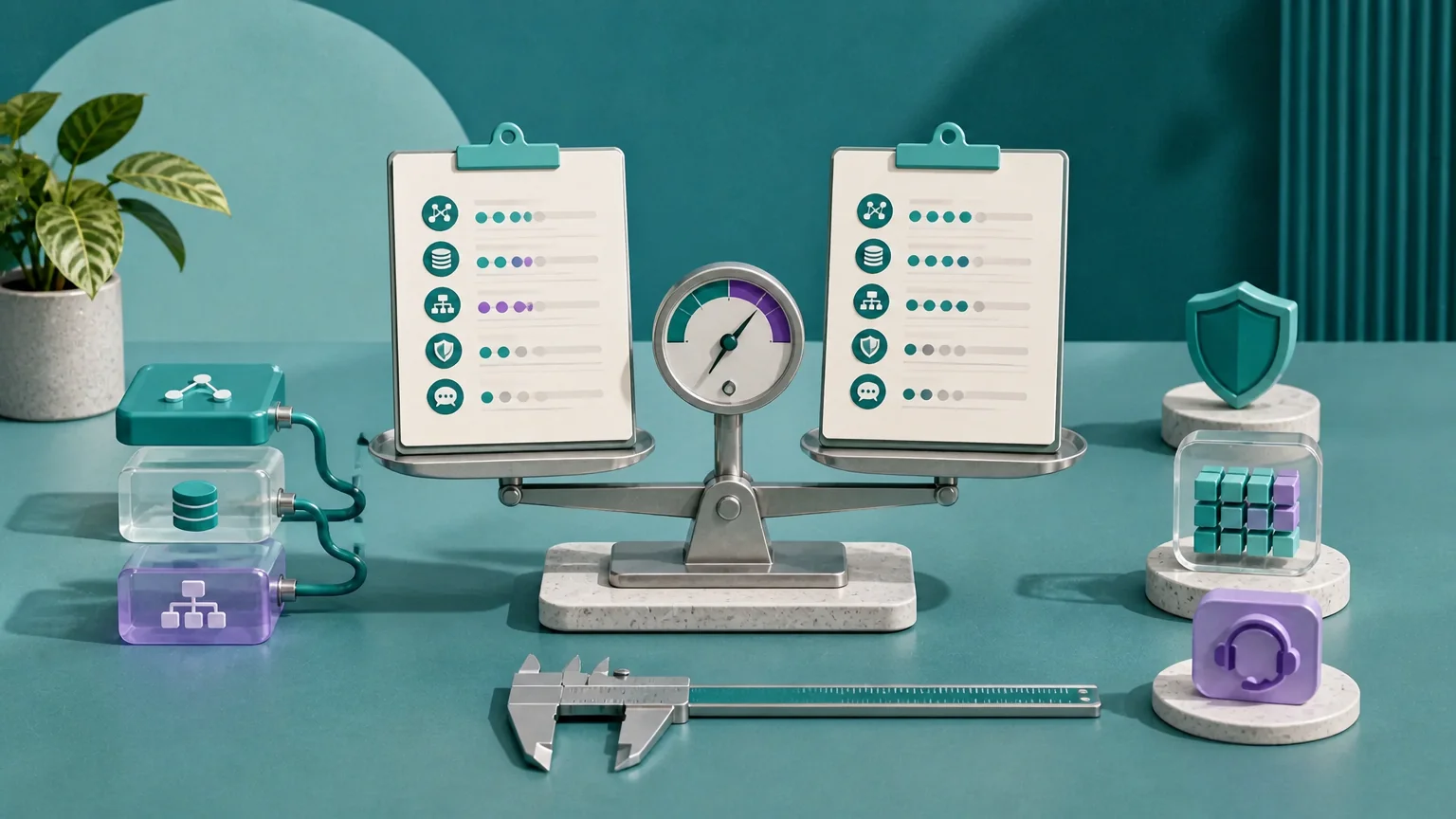
Two AI automation quotes can be thousands of pounds apart for reasons that have nothing to do with the model. One might cover a SaaS integration and a handover call. The other might include data cleanup, evaluation, security review, deployment and support after launch.
Until you read the scope, the numbers tell you very little.
Public pricing pages show the spread. Magora lists separate UK prices for AI agent prototypes, workflow agents, knowledge agents, production applications and support.[3] CloudMotiv lists separate US ranges for single-workflow pilots, custom agents, multi-system builds and retainers.[4] Those are supplier-specific packages, not a market rate card. Still, they are a useful reminder that "AI automation" is not one product.
Work out what decision you are buying
A quote should answer a decision rather than describe activity.
You might be buying an assessment to decide whether a workflow is worth automating. You might be buying a prototype to test one uncertain assumption. Or you might be buying a production system with an owner and an operating plan.
Those are different purchases. A cheap prototype can be good value if it answers the right question. It is not a bargain production system if the awkward parts have simply been left out.
Understand the pricing models
Assessment or discovery
This should cover workflow mapping, a baseline, data and risk review, technical options and a recommended next step. The useful output is evidence for a decision, not a thicker proposal for more work.
Prototype or pilot
A prototype should test a specific uncertainty against representative examples. It needs success criteria and a limit on what the result proves. Passing a small test does not make the production case.
Production build
A production build includes the workflow, integrations, permissions, evaluation, failure handling, deployment, documentation and handover. The cost depends on what the system can do and what a mistake would cost.
Ask whether the quote includes the application around the model. An agent that can read and write records needs more than a prompt and a chat interface.
Support or retainer
Source data, APIs, models and business rules all change. Someone has to review output quality, investigate failures and approve updates. A lower build price can be misleading if nobody is responsible for that work afterwards.
The costs that are easy to miss
Integrations
Connecting two modern systems with documented APIs is not the same job as connecting a CRM, ERP, email, document store and a legacy system with no API. Ask for the systems and data flows to be named.
Data preparation and permissions
Clean, current, structured information is easier to work with than contradictory documents and incomplete records. The proposal should say what preparation is included. If personal data is involved, the ICO's AI guidance and risk resources should inform the assessment.[2]
Evaluation and review
A credible quote includes representative examples, difficult cases and a way to measure human review. If review effort is not in the proposal, the expected saving may be overstated.
Security and assurance
Access control, audit records, retention and incident handling all take work. NIST's AI Risk Management Framework is a voluntary reference for considering trustworthiness across design, use and evaluation.[1] Your actual requirements depend on the workflow.
Running costs
Model usage is only one line. Include human review, support, monitoring, integration maintenance and supplier changes. Ask which costs vary with usage and which are fixed.
What a transparent quote should separate
Ask each agency to break the proposal into:
- workflow discovery and baseline measurement;
- data preparation and permissions review;
- prototype or evaluation work;
- production implementation and integrations;
- security and assurance work;
- documentation and handover;
- support and monitoring;
- expected model and tool running costs;
- assumptions and exclusions.
This is where comparisons become useful. You can see what is missing rather than guessing why one number is lower.
Questions to ask before accepting a price
- What workflow does this price cover?
- What baseline evidence will be collected before the build?
- Which systems are included, and which are excluded?
- What evaluation will be performed, and who supplies the examples?
- What human review is assumed, and is that effort costed?
- What security, privacy and audit work is included?
- What happens when an API, model or source document changes?
- Who owns the prompts, workflow definition, code and evaluation data?
- What support is included after launch?
- What would make the project stop after the prototype?
A good assessment may save money by showing that an integration or a clearer process is enough. A good production build should explain why the additional controls are necessary for your workflow.
If you want a grounded estimate, bring one process, the systems involved and the people responsible for it. Our AI consulting and automation service starts there. For the wider supplier decision, see how to choose an AI consultancy in the UK.
Sources
Discuss your software, technical leadership or AI plans
Tell us what you need to build, improve or decide.
We can help with software development and ongoing support, fractional CTO leadership, and practical AI adoption. Speak to our senior team about your priorities, our approach and availability.
Choose 15 or 30 minutes. Booking requests require confirmation by email.