· · Matthew Ford · 4 min read
Building an AI agent to help support ISO 27001 audit checks
ISO 27001 creates a useful discipline for security. It also creates a lot of evidence work.
At Bit Zesty, we need to show that our operational controls are being checked in practice. That includes server hardening, access control, patching, firewall posture, service health, and signs that a host has drifted from its expected setup.
Some environments need a full security operations platform. But a small hardened server does not always need the cost and overhead of a SIEM. Jumpboxes, utility hosts, and self-hosted GitHub Actions runners still need regular checks. They just need checks that fit their risk and scale.
That is why we built Watchkeeper, a small AI agent for reviewing server security evidence.
The problem
Manual server checks do not scale well. They are repetitive, easy to postpone, and hard to evidence consistently during an audit.
Heavyweight monitoring can create the opposite problem. You get another tool to manage, another stream of alerts, and more noise for the team to triage.
We wanted something smaller:
- daily evidence collection
- clear drift detection
- fewer false alarms
- human review when something changes
- useful records for ISO 27001 reporting
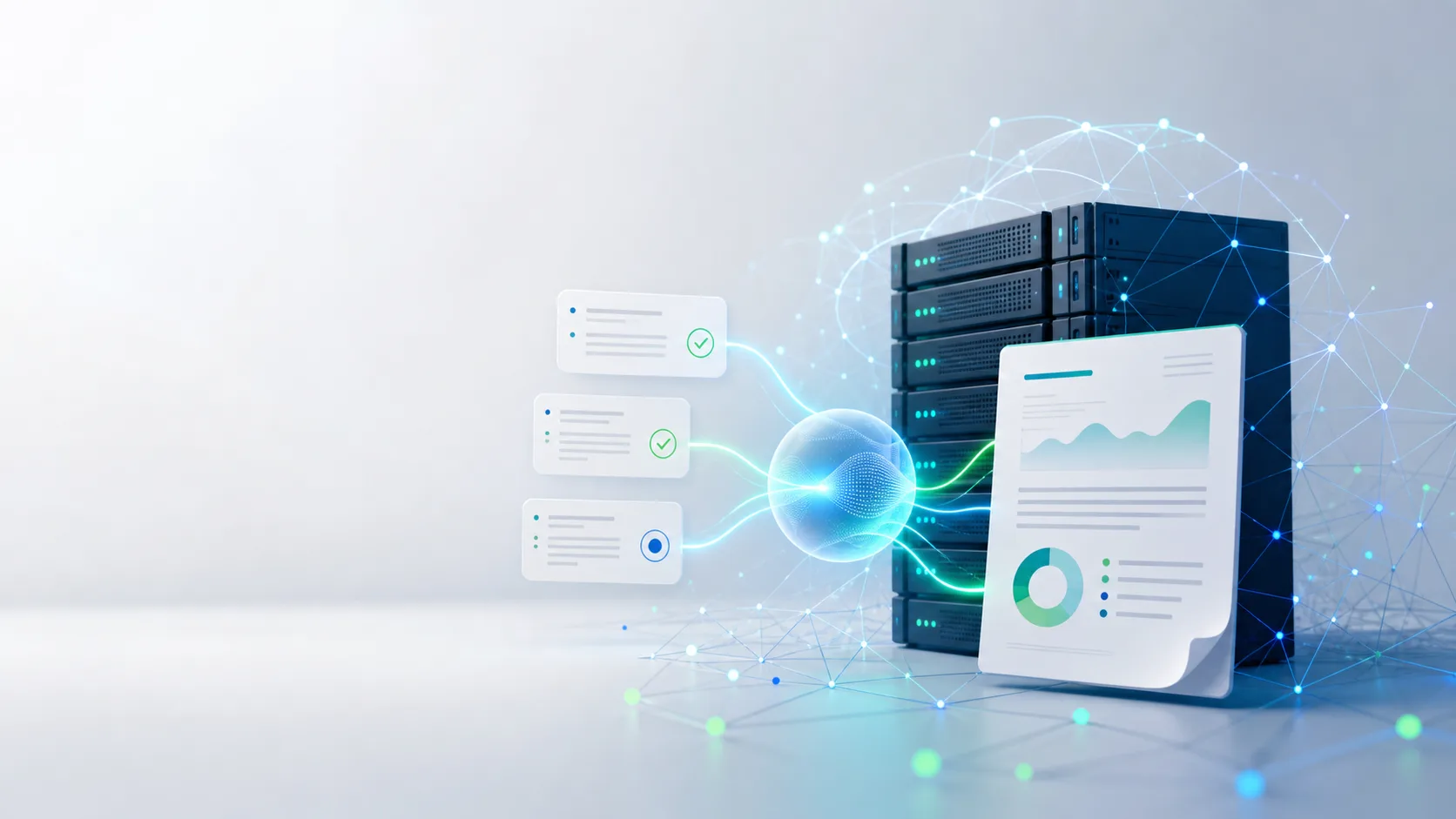
Watchkeeper sits in that gap. It reviews the evidence, emails the team when something needs attention, and produces monthly audit emails we can retain for ISO 27001 reporting.
What Watchkeeper does
Watchkeeper is a lightweight server-side AI agent that runs from cron on Ubuntu servers.
It collects a plain-text security report and compares the current host state with known-good baselines and documented expectations.
It checks things like:
- listening ports
- SSH configuration and authorised keys
- users, groups, and sudo access
- cron entries and systemd services
- available security updates
- UFW, fail2ban, auditd, and AppArmor
- antivirus service health
- local file integrity signals
The facts come from the server. The AI does not decide whether a port is open, whether a user exists, or whether a service is running. The operating system provides that evidence.
The agent reviews the evidence and decides whether a person needs to look. It also sends a monthly audit summary so we have a regular record of checks, even when there are no urgent alerts.
How the agent review works
After Watchkeeper collects the report, the agent compares the evidence with the host context.
The output is deliberately simple:
DECISION: SEND
DECISION: SKIP
If the decision is SEND, the team gets an alert email. If the decision is SKIP, the report is retained as evidence without creating another alert.
Separately, Watchkeeper sends a monthly audit email. That gives us a regular summary for ISO 27001 evidence, rather than only hearing from the system when something has changed.
The agent cannot change the server. It cannot approve a risky change. It cannot refresh the baseline. That remains a human decision.
This is the part we care about most. AI is useful here because it is constrained. It reviews structured evidence, with a narrow decision, inside a workflow we already understand.
Why context matters
Servers are not all meant to look the same.
A Tailscale jumpbox has a different normal state from a self-hosted GitHub Actions runner. A utility server might have expected cron jobs that would be suspicious elsewhere. Some hosts should have no public web service at all. Others exist to expose one.
Watchkeeper gives each host its own context file. That context can describe expected ports, approved admin users, trusted private network ranges, cloud provider recovery behaviour, expected jobs, and known absences.
This reduces noise. It also gives us a clear record of what we expect from each host, which is useful for ISO 27001 reviews.
What it caught
During testing, Watchkeeper caught the kind of issues we wanted it to catch.
In one case, a recovery session had left SSH weaker than expected. Root login and keyboard-interactive authentication had been re-enabled. Watchkeeper flagged the change, we reviewed it, fixed the SSH configuration, removed the temporary recovery keys, refreshed the baseline, and reran the check.
In another case, an antivirus service was failing because the host had no swap and the operating system was killing the daemon. That was not a dramatic security incident, but it was still a control failure. Watchkeeper surfaced it, we added a small swapfile, restarted the service, and confirmed the next report was clean.
These are ordinary operational issues. That is why they are worth automating. They matter, but a person should not have to rediscover them manually every day.
How this supports ISO 27001
ISO 27001 is easier to operate when evidence is created as part of the normal workflow.
Watchkeeper gives us a repeatable record of:
- what was checked
- what the expected baseline was
- what changed
- whether human review was needed
- which monthly audit summary covered the check
- what was fixed before the baseline changed
That helps with internal review and audit preparation. It also helps us talk about risk in practical terms. Instead of saying "we believe this server is hardened", we can point to recent evidence that it still matches the expected posture.
Why we built it this way
We built Watchkeeper for ourselves first.
We were not trying to create a product, a dashboard, or a SIEM replacement. We wanted a practical way to improve our own ISO 27001 evidence process and reduce the manual effort involved in checking small servers.
But the principles are reusable. The same pattern could be applied to other routine control checks where the facts can be collected from a trusted system and reviewed against documented expectations.
Over time, this kind of approach could also grow into something broader. You could add central reporting, richer integrations, more control types, or connect the evidence into an existing SIEM. The important point is the order: start with reliable evidence and clear escalation rules, then add more automation where it helps.
Lessons learned
The useful AI opportunities are not always the flashy ones.
For a CEO, the value of Watchkeeper is not that "AI does security". It is that a repetitive control activity becomes more consistent, better evidenced, and less dependent on someone remembering to run manual checks or compile audit updates by hand.
The same pattern applies beyond server monitoring:
- collect facts from a trusted system
- write down what good looks like
- use AI to review the evidence
- limit what the AI can do
- send unclear or risky cases to a person
- keep the evidence
That is where AI agents are useful in real organisations. They work best as reviewers inside controlled processes, not as unsupervised operators.
Do you need help with your application?
At Bit Zesty, we specialise in building and maintaining bespoke software and integrating AI into existing applications.
Looking to build an application, but unsure of the price? Keen to discuss our experience, processes and availability?